TTV Improvement: Enterprise Client Service Blueprint
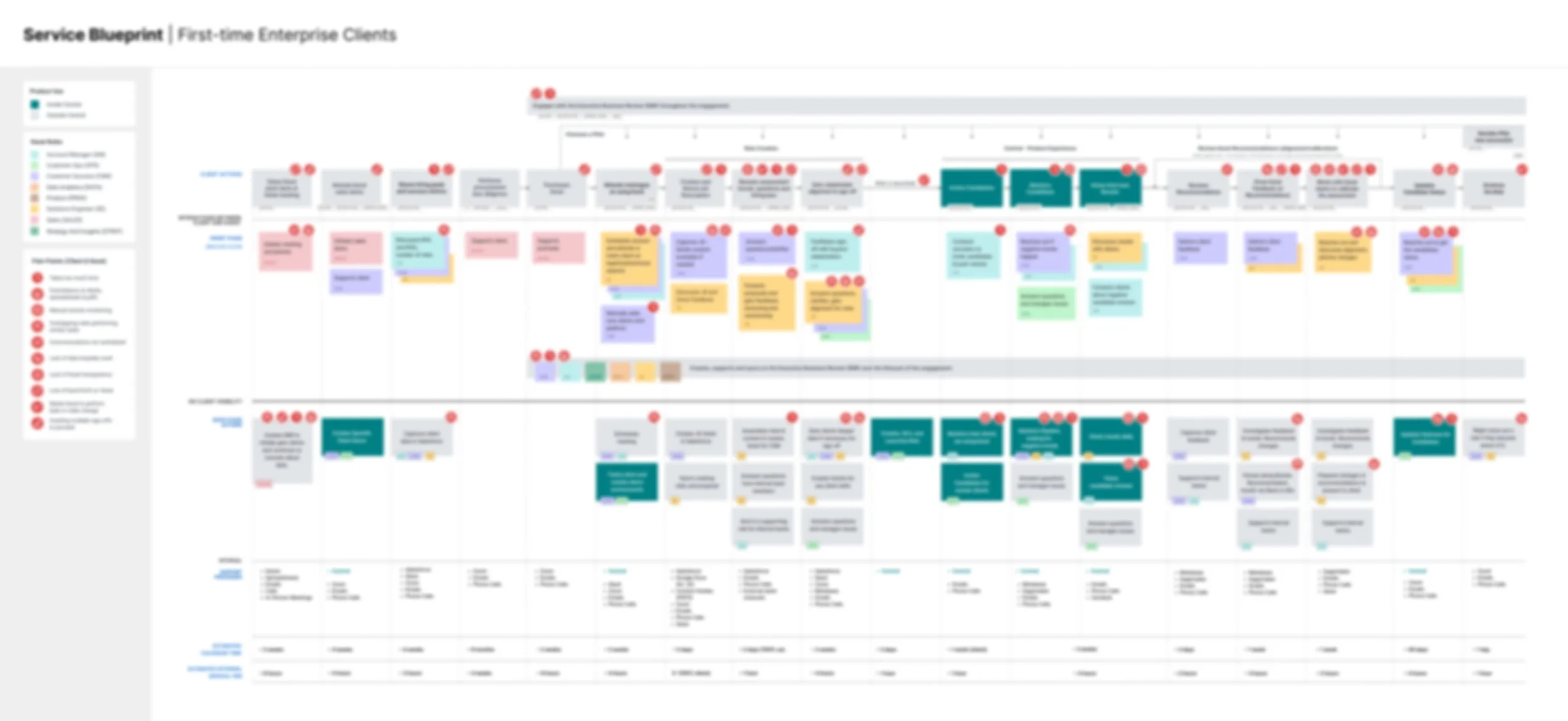
Executive Summary: I championed, proposed, and led the development of a comprehensive enterprise client experience map to serve as a blueprint for Time To Value (TTV) opportunities.
I interviewed all client-facing teams to create an audit of our existing processes. I identified recurring daily pain points, all the actors involved, how long each stage takes, and all the key Jobs To Be Done along the way.
The artifact from this project helped enterprise-facing teams gain a deeper understanding and empathy for the entire process. It helped teams confidently align on TTV opportunities to quickly gain the trust of our new and existing enterprise customers.
Why did I do this study? What is the problem I’m trying to solve with this study?
Our company was shifting to a model of prioritizing new enterprise logos as an evolution of their business plan. This was a fast and necessary pivot for our business model and it was new territory. The most pressing questions among C-Suite, VPs, and Directors were:
How can we improve our TTV for potential enterprise clients?
How can we improve our enterprise sales process for both clients and internal teams?
In these two questions I saw a perfect use of my time and proposed a longitudinal study to help answer these questions:
I audit our current end-to-end enterprise client journey process and identify people involved, as well as universal inefficiencies, roadblocks, and opportunity gaps within our current ways.
I use findings to create a holistic view of our current Resources, Values, and Processes through a Jobs To Be Done lens that will align the company to a common language.
I was so passionate about this project it’s all I talked about. I eventually convinced enough people that this was important, which ensured it became a roadmap top priority. I was now starting my journey of interviewing all 75+ people at the company who were involved with large enterprise clients.
Free Professional Advice: If you ever have a question about your customers or products, try asking your local UX Researcher. It’s our job to talk to people and gather information in a way that gets clean data so we can analyze it for behavioural patterns.
We talk with so many people about so many things. If you want to know anything about your customers, it’s worth a try to ask if your UXR can help.
You’d be surprised how often we can remember an exact quote from the CTO of a client in a study three months ago that gives you exactly what you need to get unblocked.
A bonus is we, as the researchers, also feel good because we got to help someone. We’re kind of like Librarians.
How did the study go? How did the deliverables turn out?
So good. Thank you for asking.
Through 75+ interviews, I felt confident I captured our entire process, recurring friction, and all the actors along with the jobs to be done. One of the core concepts of this blueprint is to highlight every recurring pain-point, then feature where these pain-points show up in our current process. This holistic view of all our inefficiencies and roadblocks helped our leadership teams align and prioritize strategic direction on our recent pivot to win the enterprise.
I partnered with my Director of Design to finalize the artifacts below, then distributed them among the company for immediate use.
I’m very proud to say it’s widely used and appreciated.
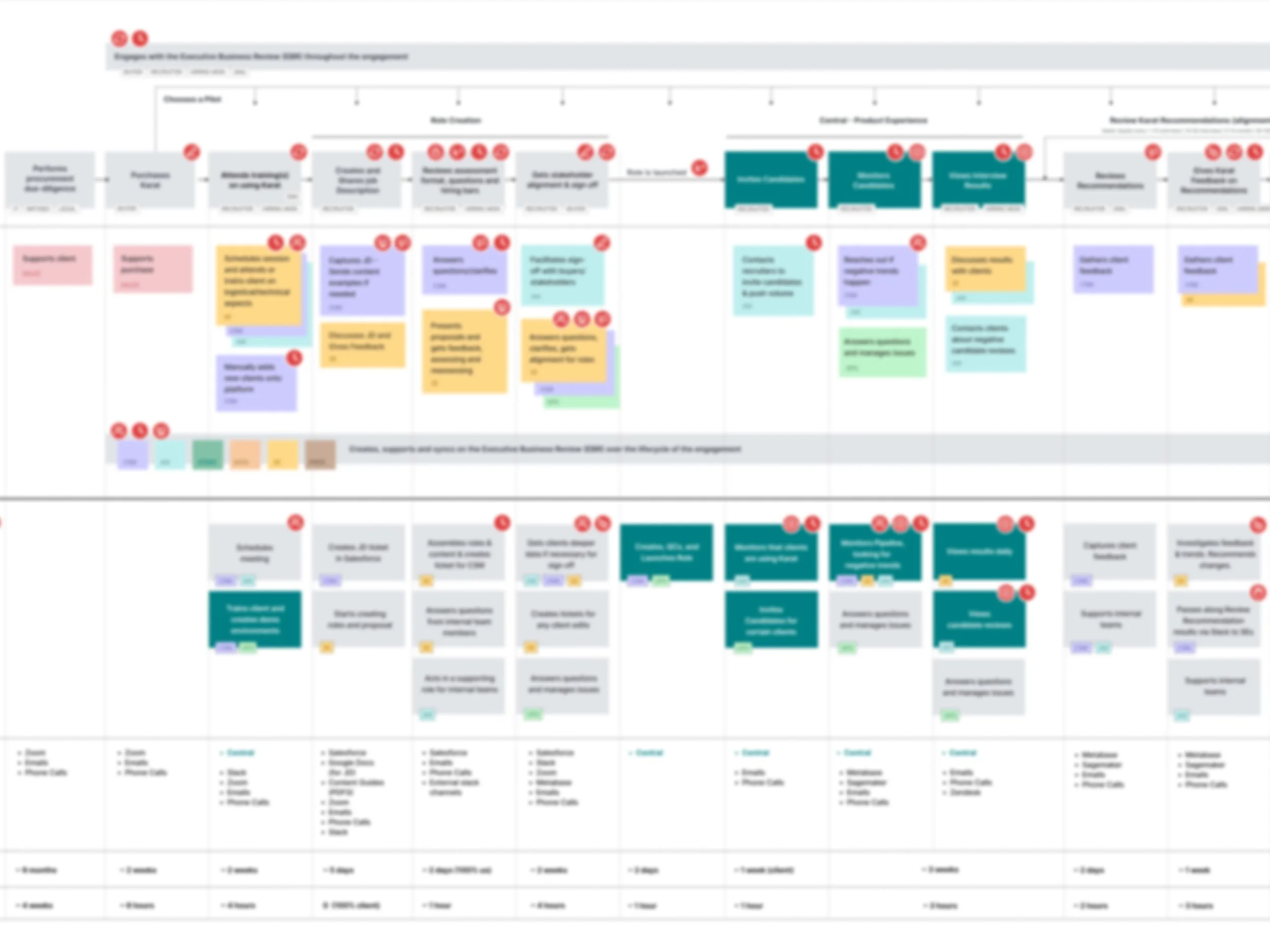
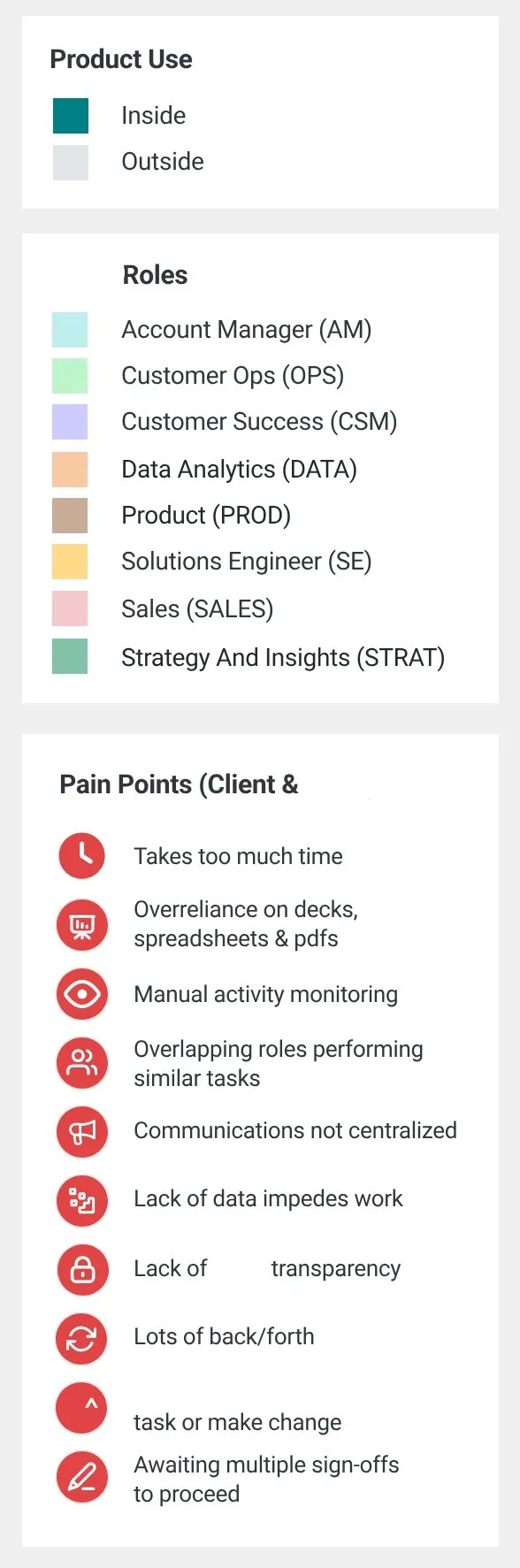
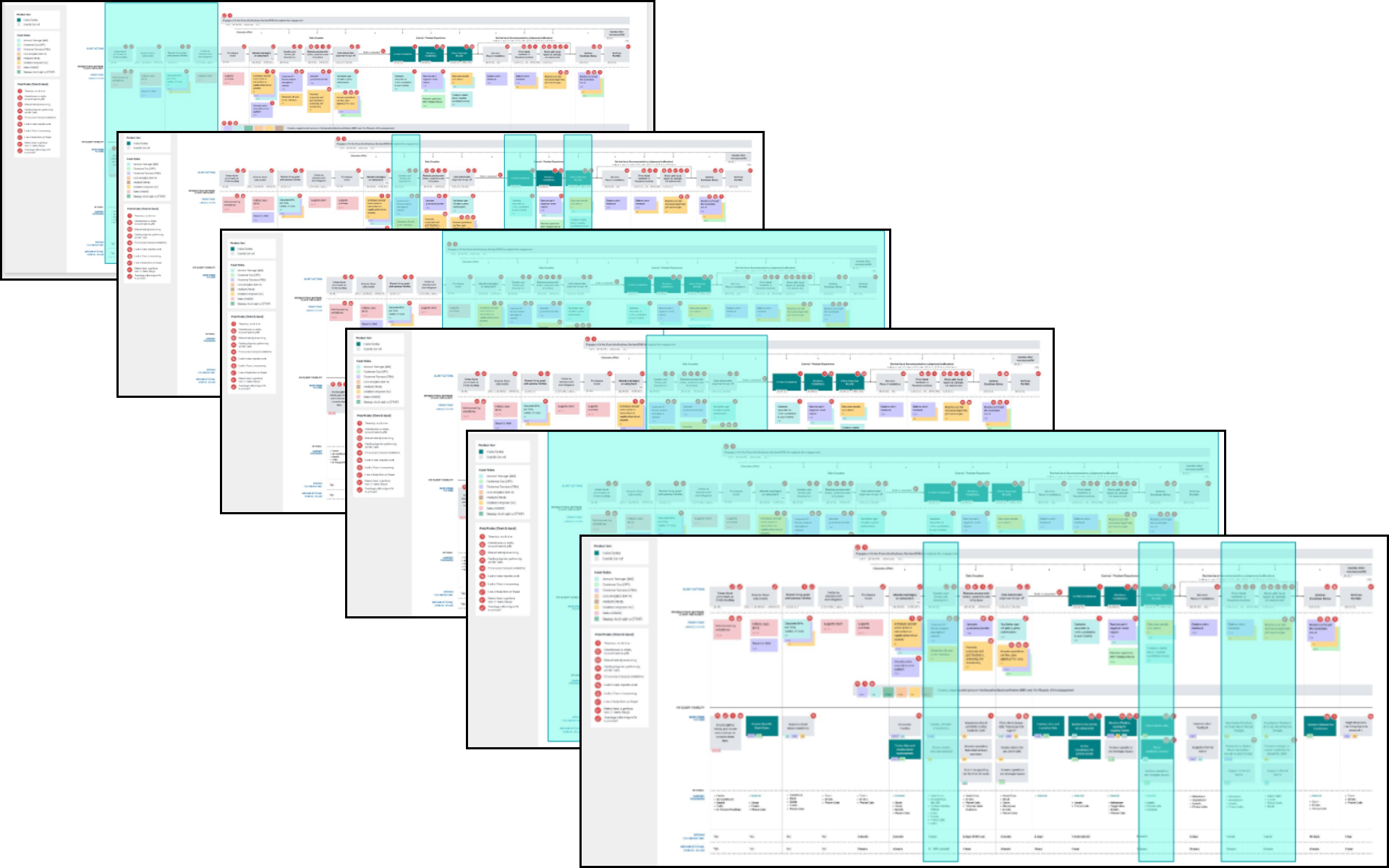
The final deliverable was the blueprint of our current process to answer the question:
How might we improve our TTV for enterprise clients to help them quickly realize our value, ultimately gaining their trust and excitement to do business with us?
I interviewed 75+ employees and synthesized the findings the artifacts above to provide easily consumable data-backed research recommendations for Product Led Growth opportunities.
This Enterprise Service Blueprint became a leadership-wide artifact for alignment and ideation. My research leadership unveiled opportunity gaps to build trust and improve Time to Value through process automation and client engagement UX.
Conclusions and Reflections
How did your research help both your direct teams and the wider company? What was the business impact?
Once our leaders were able to see just how slow and manual our current process was, they realized it would never work for enterprise clients. They began initiatives to improve TTV through strategic process automation and re-imagining client engagement in the early-phase to demonstrate value quicker.
“We have so many manual processes…”
It showed that we were still a white glove company when we needed to evolve into a SaaS company. Especially if we wanted to win the enterprise. We were looking at a mountain of sustaining and disruptive innovations among our current system Resources, Processes, and Values.
What did you, the Researcher learn from this whole thing?
Don’t sleep on internal interviews. They are a perfect mix of interview efficiency and insights depth compared to costly and timely external interviews. As the only UXR at the company, I relied heavily on my internal partners as client satellites, meaning I wanted to learn about client engagement from their unique lens. Often, I found that I could get 80% of the data any PM asks me for just by talking to internal teams.
This allowed me to come back to the PM with some answered questions, letting us dig deeper into specific questions before we set up a costly, timely external study.
I now encourage anyone who works with a UX Researcher to consider: don’t discount internal interviews because you perceive the data to be less “pure” than directly from a consumer. Often, the data is equally as “pure” and actionable if the right questions are asked. Client satellites will eventually run out of depth of answers due to the nature of their roles. At that point, it’s a good time to be more specific about your questions and start an external study.
Not only will you get answers faster, you’ll also get deeper, more specific answers from your eventual external studies.